Image © Adobe Stock
The British pound starts the new week on the back foot against the dollar, but downside should be limited.
The pound recorded its biggest weekly gain against the dollar of 2026 last week, as investors welcomed a two-week ceasefire between the U.S. and Iran that would allow for a mediated end to the conflict.
That ceasefire is now all but dead as the U.S. goes about setting up a blockade of Iranian shipping through the Strait of Hormuz, significantly raising the odds of a renewed escalation.
The dollar has risen in response to this threat, pressuring pound-dollar back to 1.34 at the time of writing Monday. Nevertheless, losses will be limited by the belief that these latest developments are all designed to pressure Iran at the negotiating table.
Reports confirm intense efforts to keep the talks alive continue, and as long as that's the case, the dollar's advance should be limited.
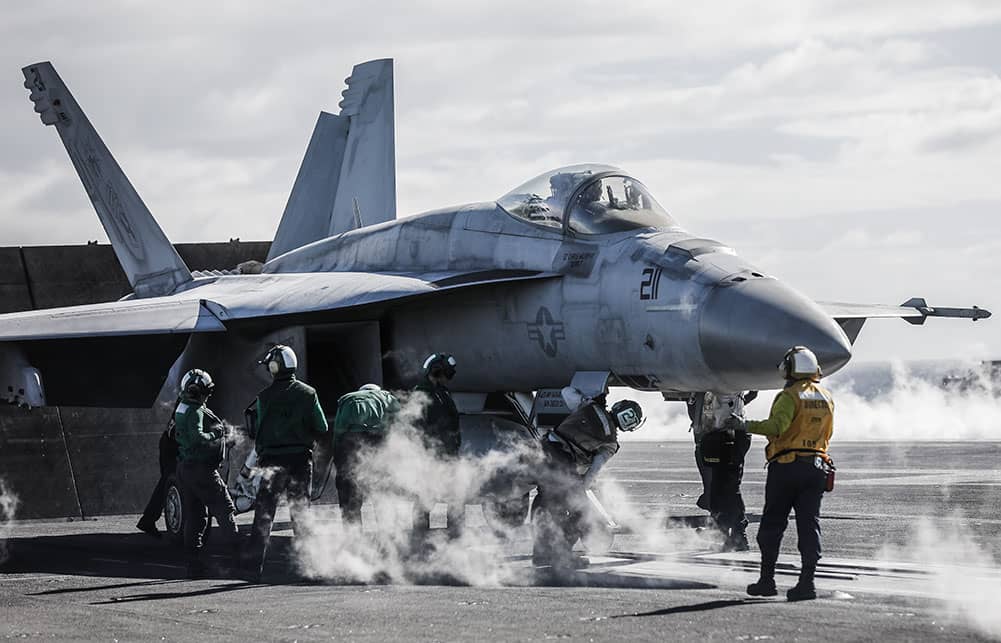
President Trump said on Sunday the U.S. would blockade the Strait of Hormuz, which has effectively been shut to maritime traffic since the Iran war began.
The U.S. military clarified it would be blocking "all maritime traffic entering and exiting Iranian ports," confirming the move is designed to pressure Iran at the negotiating table.
That's not to say all is well: Iran said its military maintains control of the Strait and will not yield to U.S. threats. This creates a new layer of uncertainty for markets to navigate in the coming days, which should limit any dollar weakness.
Monday's USD advance is relatively contained, and USD bulls might have hoped for a bigger move in response to the sabre-rattling in the news headlines.
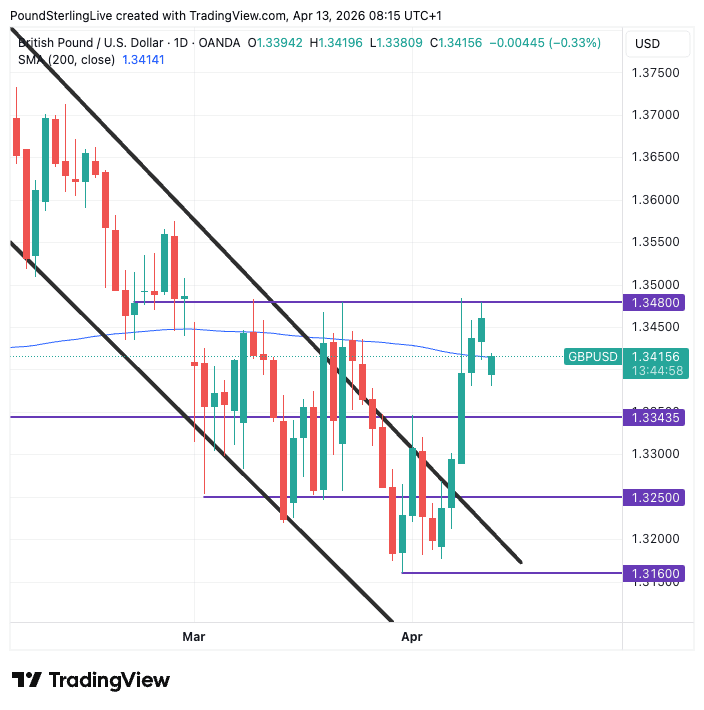
Pound-dollar dips back below the 100-day moving average at 1.3414, having been as high as 13480 last week (see top chart). That peak coincides with a strong horizontal resistance area that has contained rallies since March.
So there's some solid technical resistance above, which, combined with the geopolitical developments, means sterling-dollar is likely to pull back over the coming days, with the 1.3343 fulcrum likely to be tested next, ahead of 1.3250.
The pullback should be relatively shallow, and we don't think the downside damage will be significant, as the dollar hasn't actually had 'a good war'; if anything, it's merely consolidated against most of its major peers.
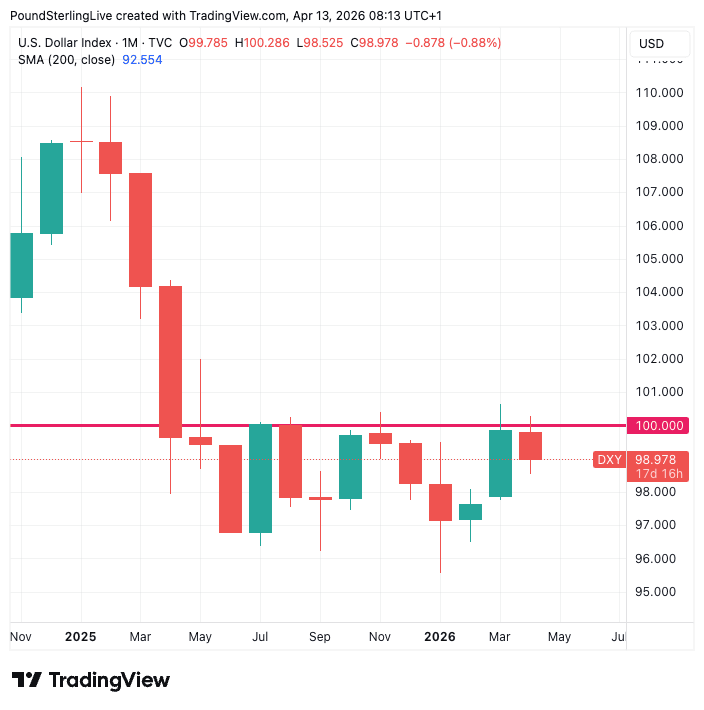
Above: The dollar index - a measure of USD performance - at monthly intervals.
The dollar is considered a safe haven that tends to benefit during times of war and rising oil prices. Sure, the dollar index rose 2.25% in March, but that is actually an unremarkable monthly move for the currency.
"The dollar's role as a safe haven could be eroded at the margin" as the geopolitical conflict increasingly turns against U.S. interests, says Tommy von Brömsen, macro strategist at Handelsbanken. "As the downside risks to the US become more visible and tangible, the dollar's role as a safe haven could be eroded at the margin."
This suggests that the traditional safe-haven qualities we would have expected of the USD during this crisis aren't shining through.
That suggests pound-dollar will remain insulated against a major downmove in the coming weeks.