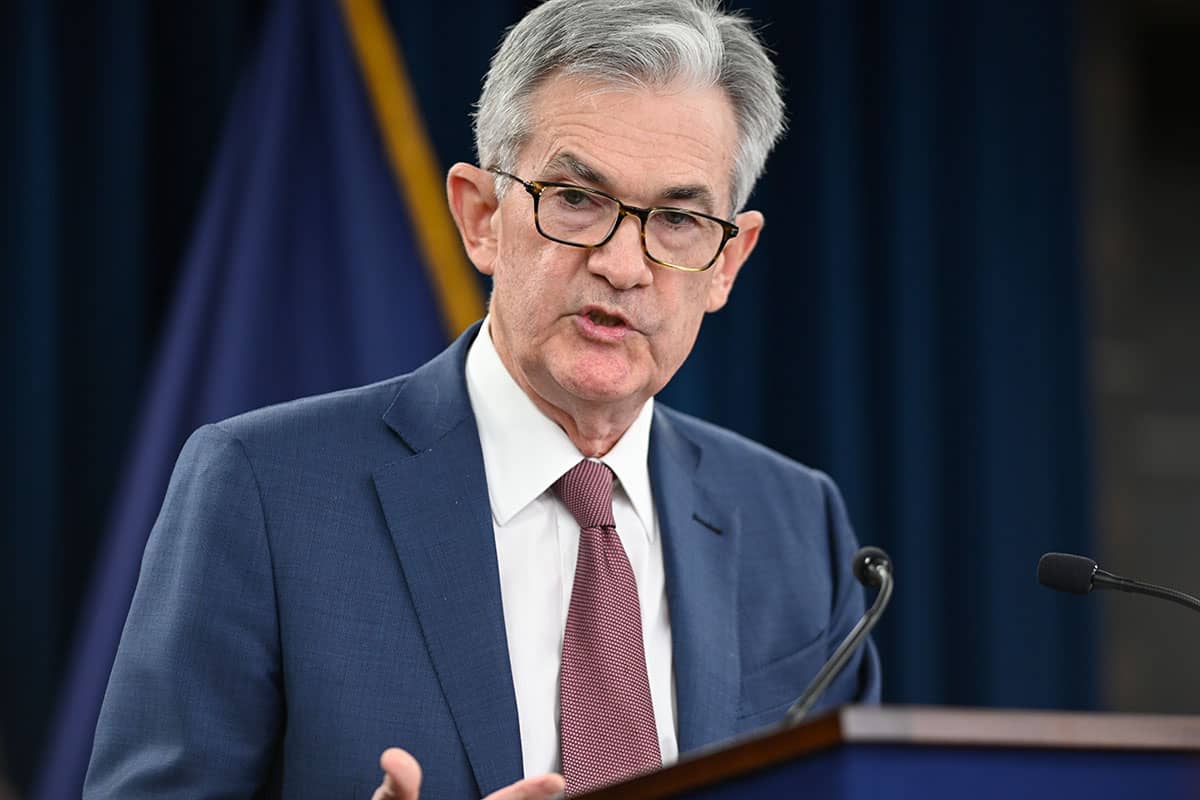
Above: Federal Reserve Chairman Jerome Powell. Image © Federal Reserve.
That headline is an unusual one: the dollar typically falls when Fed rate cut bets increase.
But here we are, entering Q2 of 2026, and traditional financial market correlations are in flux, with the dollar strengthening even as the market positions for Federal Reserve rate cuts once more.
In a speech delivered at Harvard University on Monday, Federal Reserve Chair Jerome Powell said inflation expectations appear well anchored for now and that the Fed is well positioned to maintain a wait-and-see stance.
Markets interpreted this as 'dovish' - when a central bank errs towards lowering interest rates - by the Fed Chair, and traders bought U.S. government bonds in response.
There's now a slight bias to rate cuts in the forward-looking money market.
"Powell's comments triggered a significant reversal in bond markets and interest rate expectations. Traders erased their hike bets and prices in a rate cut in 2026 after Powell said longer-term inflation expectations appear to be in check," says a morning response note from investment bank Natixis.
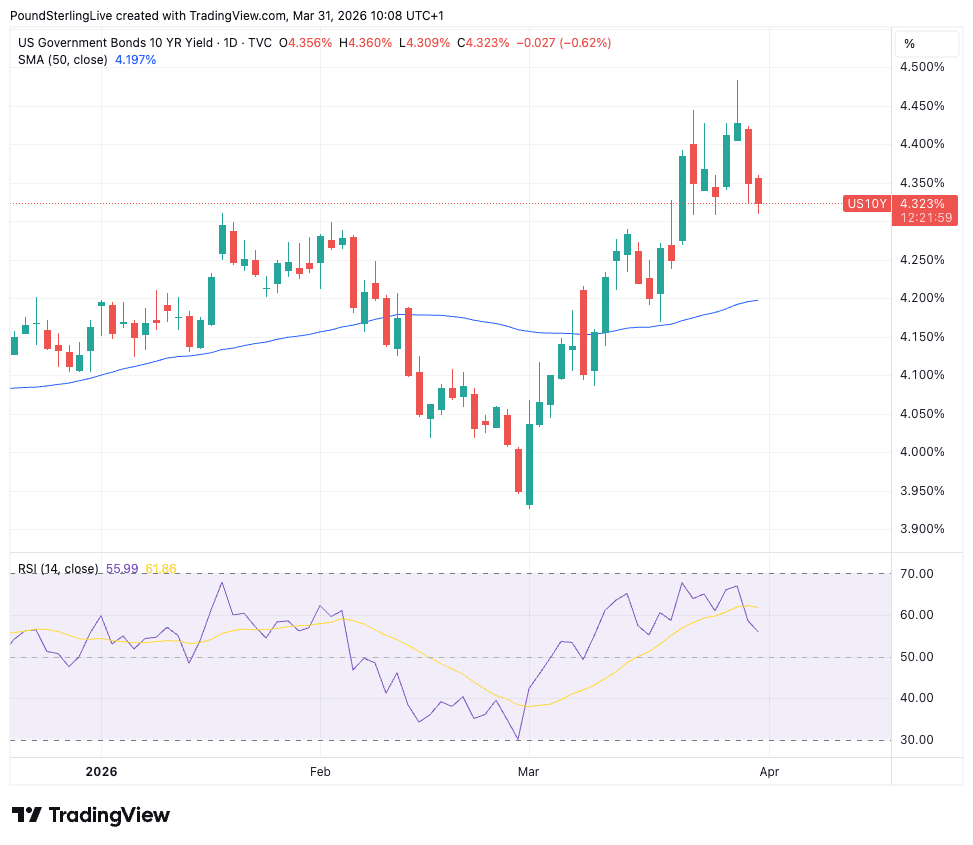
U.S. Treasury bonds rallied sharply, sending their yields lower to 4.32%, making for the largest one-day decline in yields since August.
The UK ten-year bond yield also fell, but not by as much: that would typically be expected to help the pound-dollar exchange rate move higher.
Instead, GBP/USD fell to 1.3159 in early Tuesday trade, putting it at its lowest since December 03.
For now, it looks as though developments in the Middle East continue to hold sway, even though there has been no material escalation relative to what we have seen through the course of the crisis.
"The Dollar extends its winning streak to five sessions as Middle East safe-haven flows persist, posting its best month since September 2022," says Thanim Islam, analyst at Equals Money. "GBP slipped alongside most G10 peers."
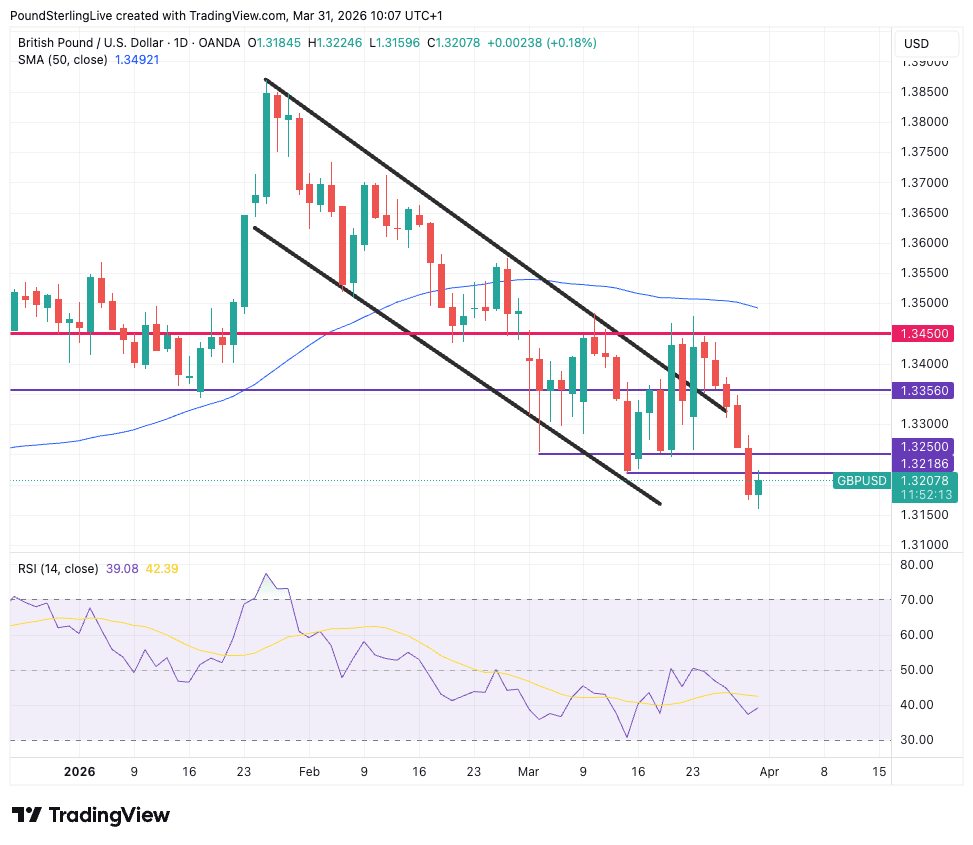
To be sure, higher oil prices are supportive of the dollar, as are fears that the global economy will suffer a slowdown owing to elevated energy prices.
Perhaps the dollar is playing catch-up with the realities of the crisis.
However, should the dust settle on the conflict, we would expect the recent bond market developments to re-establish control of the FX market, and that would imply a weaker dollar.