
Image © Adobe Images
The NZ dollar continues to give back its 2026 winnings against the pound, with the latest bout of weakness taking GBP/NZD to its highest level in more than two months.
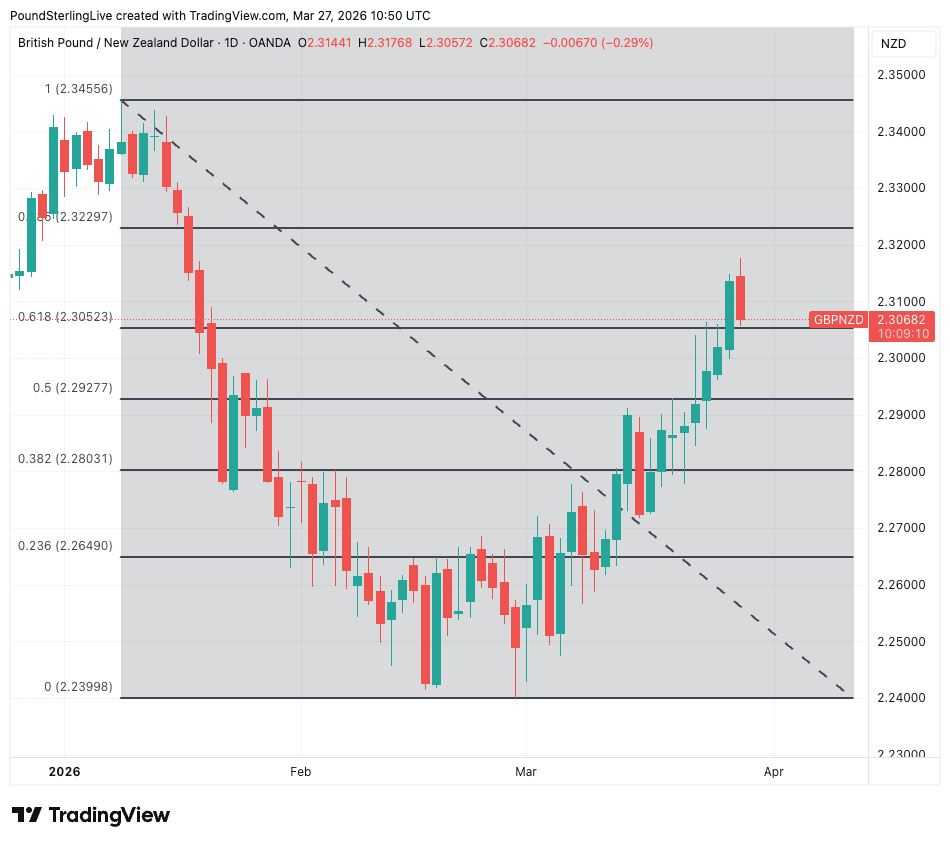
The pair has risen to 2.3067, with an earlier Friday peak at 2.3176, meaning GBP/NZD has now retraced roughly 60% of this year's maximum decline.
The move reflects a clear shift in how markets are pricing energy risk, and New Zealand sits on the wrong side of that equation. "The NZD is generally weaker given persistent Middle East tensions," says a daily note from Auckland Savings Bank. "Developments in the Middle East look set to dictate market direction, with forward-looking gauges being watched for signs of how big an economic hit this latest shock will bring."
The NZ dollar’s losses reflect the country’s growing exposure to imported energy at a time when global supply is under strain.
The government has unveiled a National Fuel Plan that would ration fuel if supplies begin to run dry, underlining just how exposed the economy is to disruptions stemming from the Middle East conflict.
That vulnerability has been building for some time, particularly since the closure of domestic refining capacity in 2022, which increased reliance on imported fuel.
Strategists are now actively positioning for further downside.
“High-beta FX is likely to underperform if oil prices spike and equities fall. NZD is our preferred short,” says Adarsh Sinha at Bank of America. "New Zealand's import dependence has increased, especially after closure of MP refinery in 2022."
The broader macro backdrop reinforces the pressure.
Brent crude remains almost 50% higher than before the flashpoint in the Middle East four weeks ago, compared with a roughly 20% rise at a similar stage following Russia’s invasion of Ukraine in 2022.
Natural gas prices are up more than 70% since the end of February, while agricultural commodities such as corn and soybeans have surged by around 25%. This is a difficult mix for an energy-importing economy.
New Zealand’s fiscal position is relatively solid, but the government has already responded to rising costs, announcing support payments for nearly 150,000 households to help offset higher petrol prices.
“The heightened likelihood of a more persistent energy shock raises financial stability risks because it traps central banks in restrictive policy and puts government debt on a more fragile and unsustainable path,” says Elias Haddad at Brown Brothers Harriman.
And all through this, the currency’s high-beta status, where a currency has a strong correlation to investor sentiment, acts as a clear headwind.
A new note from Société Générale warns that high beta currencies – such as the Kiwi – will struggle to shake off the gloom over fears of a prolonged energy shock.
From here, GBP/NZD eyes an extension to 2.3230, which is the approximate 78.6% Fibonacci retracement of 2026's fall.