
Image © Adobe Images
Euro finds its footing against the dollar despite Eurozone PMI data disappointing and warning that stagflationary conditions are emerging.
The euro is softer as markets digest disappointing PMI data, but downside is limited as the single currency forms a base against the dollar.
The euro-dollar pair is down 0.23% on the day at 1.1584, as markets onboard news that the U.S. will be denied a quick exit from the Iran war and domestic data points to a slowdown in economic activity.
News just out from S&P Global is that its measure of private sector activity in the Eurozone showed a slowdown, with the composite PMI falling to 50.5 from 51.9, the market consensus was set on a reading of 51.1.
S&P Global said its survey showed a "near-stalling" of output growth in the eurozone private sector amid a reduction in new orders.
"Notably, the rate of input cost inflation accelerated sharply following the outbreak of war in the Middle East to the fastest in just over three years," said the organisation:
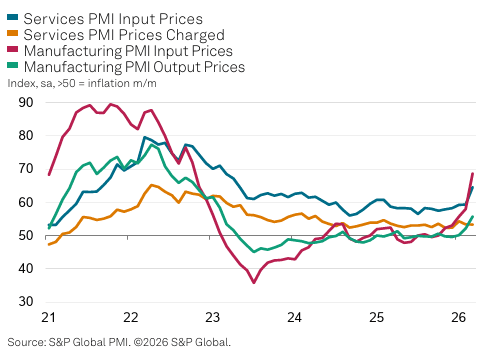
S&P Global PMI.
Encouragingly, the manufacturing sub-component read at 51.4, up from 50.8, beating expectations for 49.5.
However, its services are where the weakness lies, with a reading of 50.1 undershooting expectations for 51 and February's 51.9.
"The slowdown in growth was in large part due to a near stagnation of business activity in the service sector," says S&P Global.
The big takeaway is that input cost inflation at Eurozone businesses is sharply higher. The survey reveals input prices increased at the fastest pace since February 2023. Steeper inflation was registered across both manufacturing and services.
"The flash Eurozone PMI is ringing stagflation alarm bells as the war in the Middle East drives prices sharply higher while stifling growth," says Chris Williamson, Chief Business Economist at S&P Global Market Intelligence:
The data comes as markets ramp up bets that the European Central Bank will have little option other than to raise interest rates in the coming months to meet the inflationary threat.
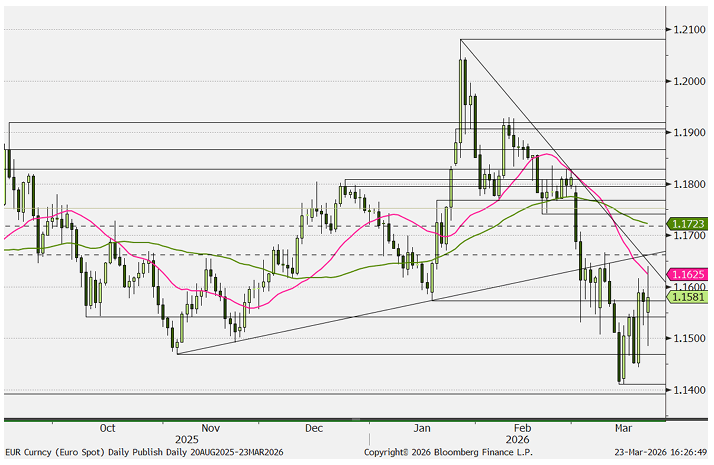
Image courtesy of Lloyds Bank's market research.
That uptick in rate hike bets will underpin the euro against the dollar and offer it some downside protection from developments in the war and in the domestic economic data pulse.
"There are some clearer signs of a base emerging with the lows last week setting in above the 1.1392 low from July, keeping us in the higher consolidation range," says Nick Kennedy, FX Strategist at Lloyds Bank.
"From here it'll be about sustaining that momentum, ideally with the cross reestablishing above 1.1573 over the course of the week. That would create a platform for a further unwind of the decline over the first half of the month," he adds.
From a strategic viewpoint, Kennedy looks to buy dips leaning on 1.1469 on a closing basis from here.