Image © Adobe Images
The pound climbs as markets now see two rate hikes in 2026.
The market has interpreted the Bank of England's new guidance as 'hawkish' and now sees two interest rate hikes this year.
This is a remarkable turn of events, given that just three weeks ago the market saw two interest rate cuts:
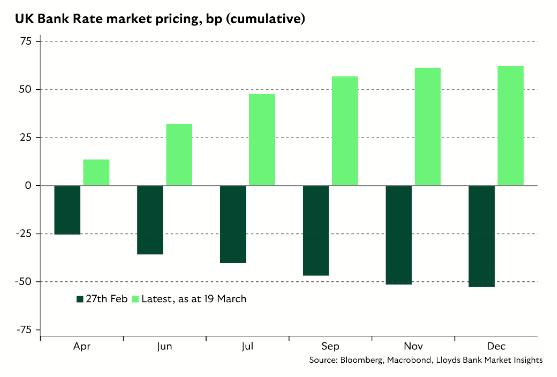
Image courtesy of Lloyds Bank.
That march higher in interest rate expectations is reflected in higher UK bond yields and the pound. Pound-euro rose to the cusp of 1.16 in the minutes following the decision by the Bank to maintain interest rates at 3.75%.
The Bank's Monetary Policy Committee (MPC) voted 9-0 to hold Bank Rate, which is a clear signal that cuts are off the table for some time now, amidst heightened fears of a new inflation shock from the Middle East crisis.
The decision will underpin the pound's advance against the euro and most other G10 currencies this March, which is a period dominated by the Middle East conflict. GBP/EUR rises to 1.1586 following the decision, GBP/USD to 1.3310, and the UK currency is recording a daily gain against most of its G10 peers.
Pound sterling's recent gains reflect the erasure of expectations that the Bank would lower interest rates today and again on at least one more occasion this year.
Heading into the day's event, the market saw odds of the next move being a rate rise, and the decision and guidance from Threadneedle Street lifts that expectation further, with 50 basis points of hikes now expected.
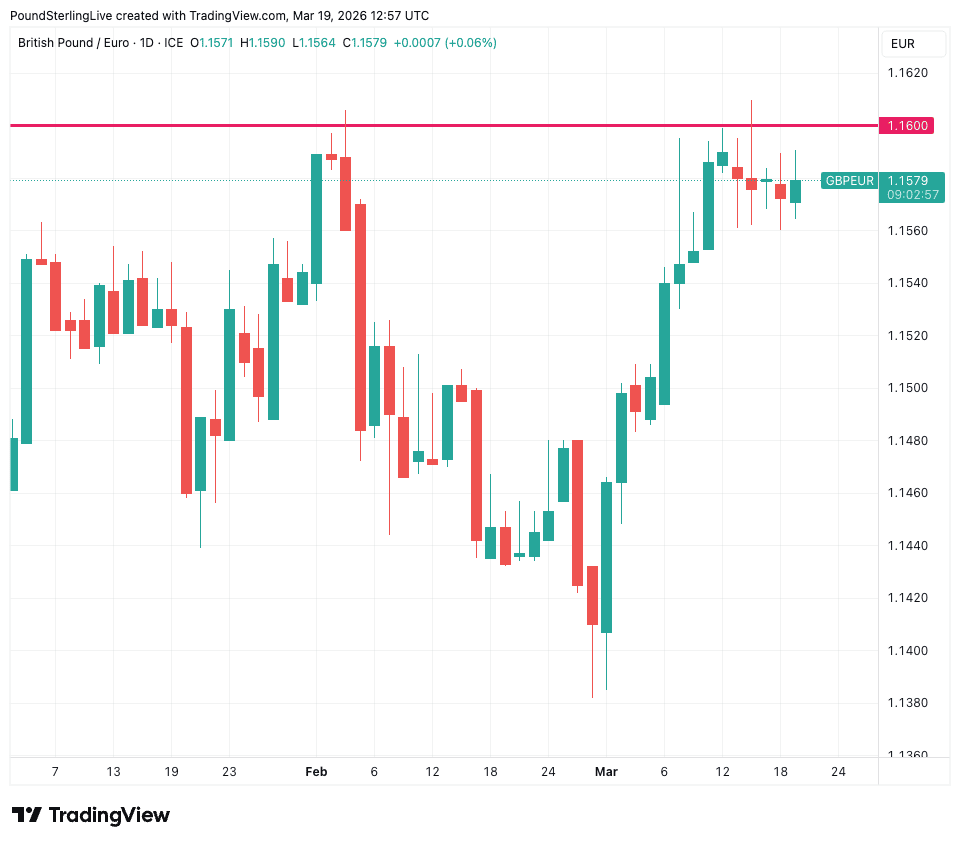
Above: GBP/EUR is well supported just below 1.16.
The MPC says the incoming inflationary spike caused by higher oil and gas prices will be temporary and should not therefore alter its medium-term view, namely that inflation is on course to fall to the 2.0% target.
"If the economy evolves as we expect, there should be scope for some further cuts to Bank Rate this year," said the Bank.
But caution must be the watchword of the day as the MPC knows there's a risk that the blip in inflation triggers inflationary behaviour elsewhere as households and businesses adapt.
Rising inflation expectations beget more inflation, and the risk is that the Iran crisis is the seed that grows another more enduring inflation trend via second-round effects.
Lowering interest rates now would risk contributing to such a scenario.
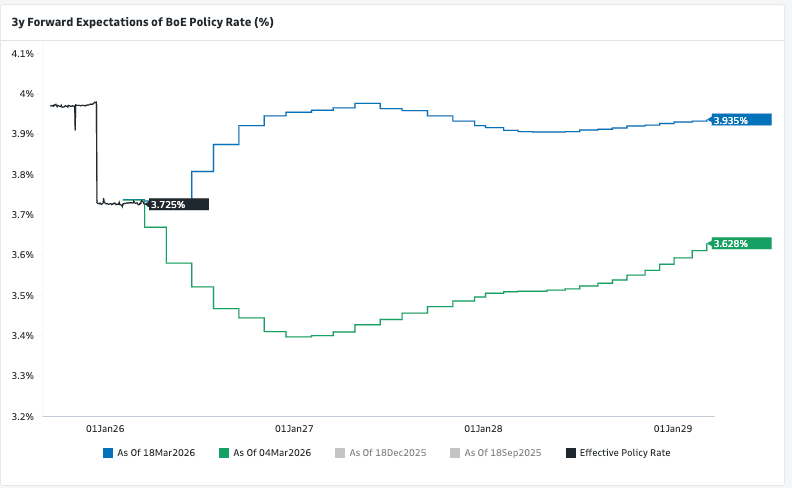
Above: Money market pricing showing a huge uplift in where investors see Bank Rate travelling in the coming months.
A delay in the cutting cycle is therefore warranted, and the issue for the pound is how long the inflationary pulse caused by the war lasts.
If the war ends soon, the market will swing back towards expecting the next move by the MPC to be a cut.
If that happens, then pound exchange rates can come under pressure again, and March's gains could ultimately be lost in a rapid mean-reversion in bond and currency markets.
However, the Bank's inflation forecasts have shifted up a gear and suggest regardless of what happens in the Middle East it will be some time before a cut is possible:
It says CPI inflation is now expected to be close to 3.5% in March, almost 0.5 percentage points higher than expected in the February Report.
CPI inflation had previously been projected to fall to 2.1% in Q2, but is now expected to be around 3%.
With inflation now set on a higher-for-longer trajectory, Bank Rate should remain anchored near current levels.
This will underscore recent gains in domestic gilt yields, which tend to translate into a firmer pound.