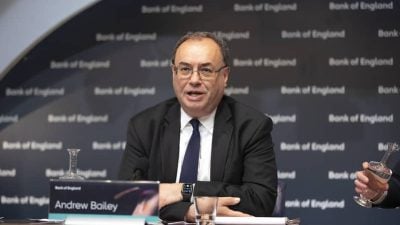
Consensus projections for the next four quarters, compiled from leading investment banks.
Access the full forecast →
Image © Adobe Images
Pound sterling could extend its uptrend against the euro in a week to be dominated by central bank decisions and the ongoing Iran conflict.
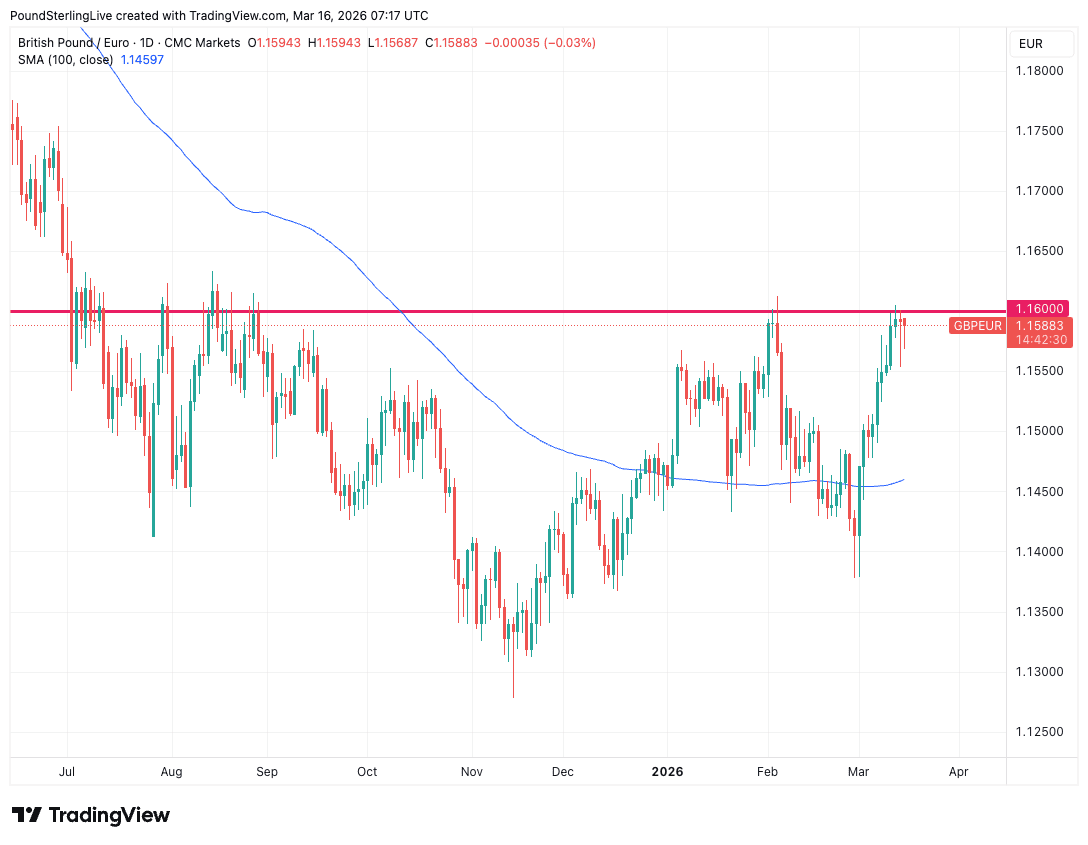
The GBP/EUR exchange rate trades just below the crucial 1.16 barrier at the time of writing Monday, a level that has frustrated the March recovery over the previous three trading days.
In fact, going back over many months reveals 1.16 has stood in the way of sterling rallies on a number of occasions, while also acting as a level of support when the currency was retreating; it therefore has a solid pedigree when it comes to technical attraction.
For now, the level is a technical block to gains, and raises the risk that the pair pulls back and eventually retreats towards the 100-day moving average (MA) at 1.1460 later in the month.
That's the downside scenario; we continue to favour an upside scenario and a break higher through 1.16 during the coming days.
This preference is built on a suite of indicators that are constructive and advocating for upside, for instance, the pair trades above short- and medium-term moving averages and the RSI momentum indicator is pointing higher at 66.
If we are to adopt a rules-based approach to the matter, then we have to acknowledge that the uptrend is still intact, and that's usually not worth fighting against.
Gains to 1.1632 are a possibility in the event of a break higher, as this is another level of overhead resistance going back to last summer, beyond which is the 1.17-1.1750 consolidation zone.
The fundamentals that underpin the British pound's recovery are also intact, namely the view that UK bond yields have re-established their advantage over European benchmarks.
That's to do with the recent unravelling of expectations the Bank of England would lower interest rates at this Thursday's policy meeting, owing to the rise in global energy prices which risk raising inflation again.
The central bank will judge it's too risky to cut interest rates at a time of heightened anxiety over inflation re-emerging, especially since the Bank of England has failed for years now to lower inflation to the 2.0% level.
It will be a cautious set of communications released by the Bank that will highlight increased uncertainty in the global outlook, which should underscore recent movements in interest rates and currency markets.
GBP/EUR
To be sure, 21 central banks, covering approximately two-thirds of the global economy in total, are setting policy, and the message of caution should be sounded by all of them.
That includes the Federal Reserve, the European Central Bank, the Bank of England and the Reserve Bank of Australia.
The ECB will have to consider the market's new assumption that it will raise interest rates before the end of the year, something some ECB policy makers have recently acknowledged.
This message should offer some support to the euro and limit any GBP/EUR upside on the day.
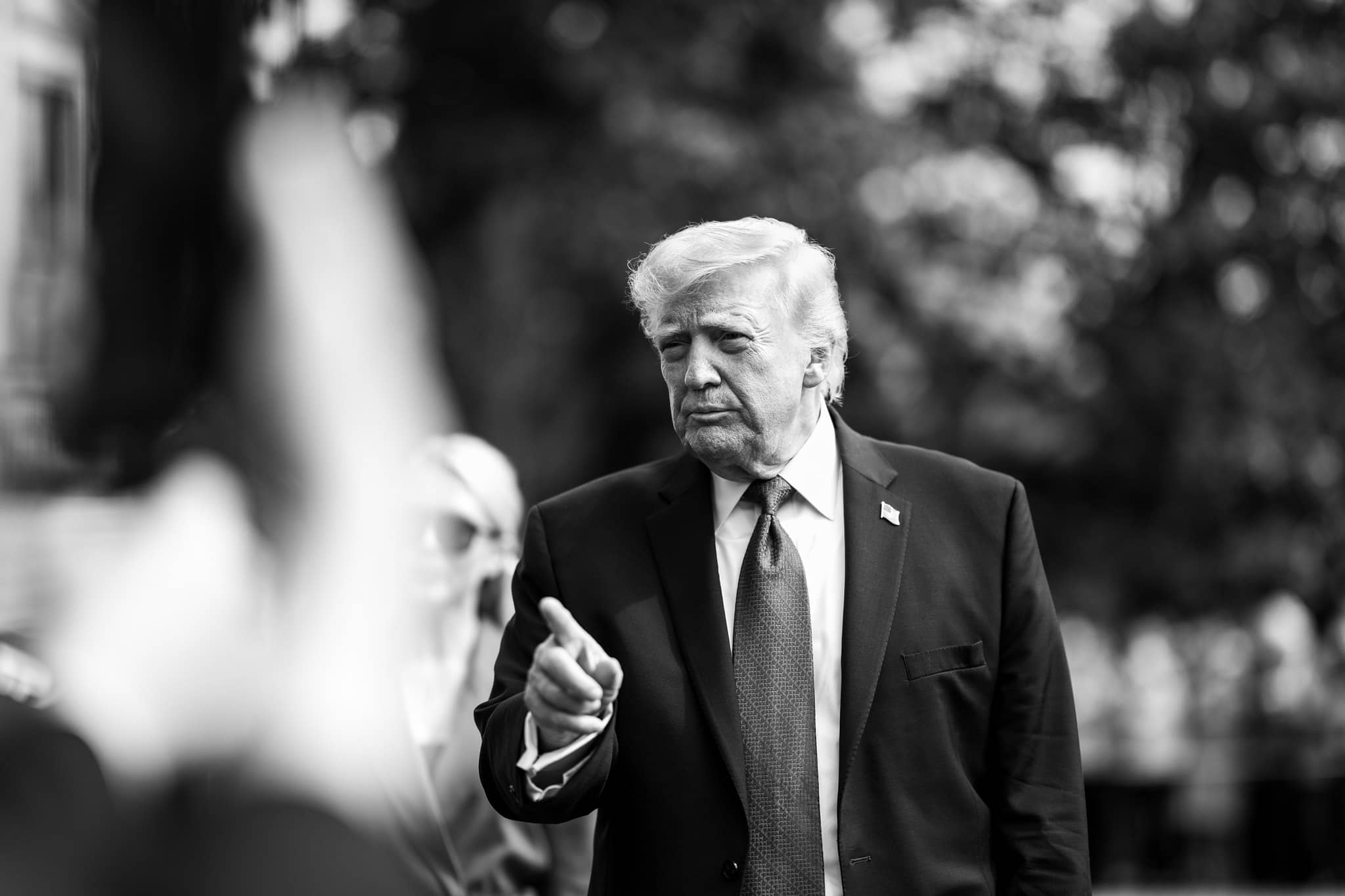
Official White House Photo by Molly Riley
Elsewhere, the Middle East conflict is ongoing with no sign of any major breakthroughs.
President Donald Trump wants to assemble a flotilla of war ships to guard the Strait of Hormuz in order to unblock global oil and gas.
If he succeeds and oil and gas prices fall, the pound could retreat in a more decisive fashion as investors start to price in another Bank of England interest rate cut.
However, judging by the lay of the land, that's not likely to happen this week and the U.S. might have to escalate to bring Iran to heel. For GBP/EUR, this would mean a continuation of gains.
Another downside risk for pound sterling is the UK government, as there's talk of a new energy support package for some households. With finances already so constrained, lenders to the UK will be asking whether or not this is feasible.
If the verdict by bond markets is yes, then the pound will be untroubled, but if the answer is no, then we could see some significant declines.
We will closely scrutinise any new information on the matter.