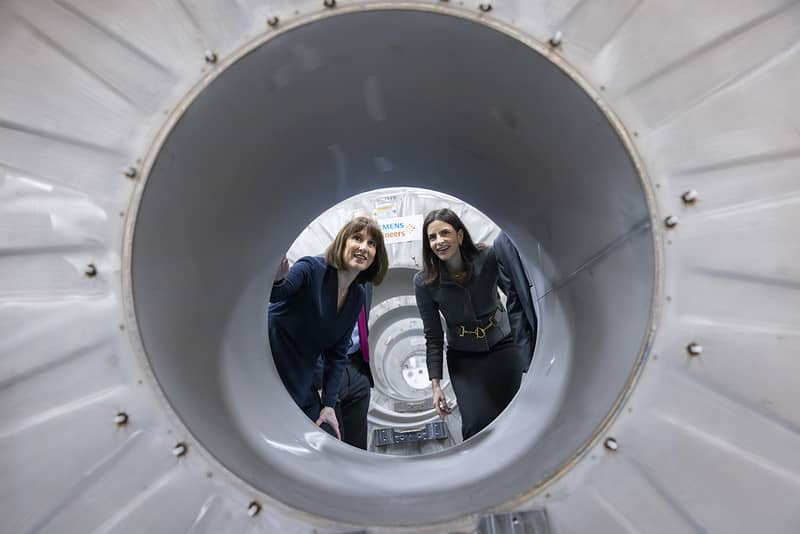
File image of Rachel Reeves. Picture by Kirsty O’Connor / Treasury.
UK government borrowing overshot forecasts by £6.9 billion in February, hitting the second-highest level since 1993.
UK public sector borrowing reached £14.3 billion in February 2026, the Office for National Statistics said on Friday.
The figure was £6.9BN above the Office for Budget Responsibility's forecast of £7.4BN, published in November 2025.
It was the second-highest February borrowing since monthly records began in 1993, surpassed only by the pandemic year of 2021.
The data comes one month after the government announced a rare surplus in finances, which is often the case in January, as this is when a significant self-assessment windfall traditionally falls.
With the self-employed having boosted the coffers, the Treasury is back to borrowing to meet its spending commitments. The overshoot in the latest set of data was driven almost entirely by central government spending, which came in £7.7BN above forecast.
Central government debt interest payable was the single largest contributor, rising £5.5 billion year-on-year to £13.0 billion in February alone.
The surge in debt interest was largely attributable to the RPI-linked component of index-linked gilt payments, which added £4.8 billion to the monthly total.
A timing distortion also inflated the February figure, as £2.0BN of coupon payments due on 30 January were settled on 2 February because of an intervening weekend.
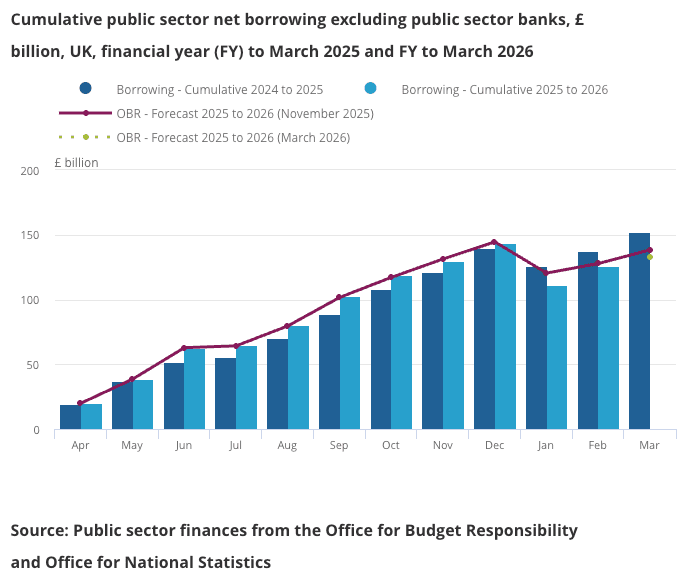
For the financial year to February 2026, cumulative borrowing stood at £125.9BN, the fourth-highest April-to-February total on record.
That year-to-date figure was nonetheless £11.9 billion, or 8.7%, lower than the same period a year ago, and £1.9 billion below the OBR's full-year forecast profile.
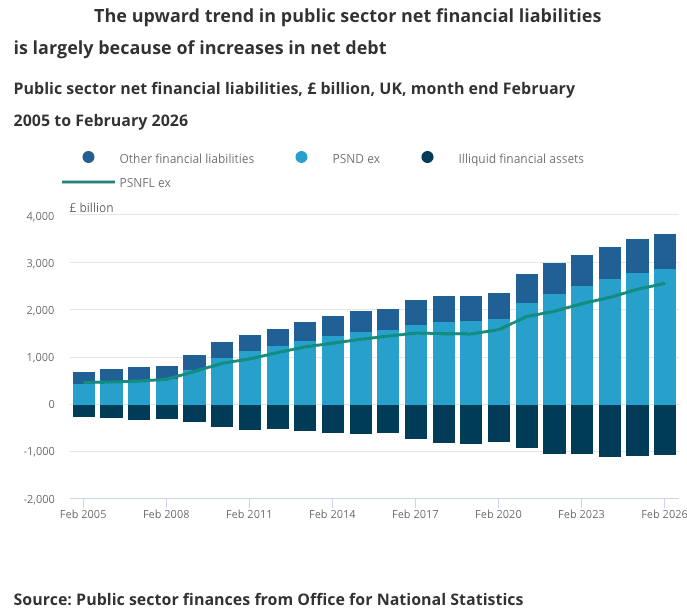
Public sector net debt stood at 93.1% of GDP at the end of February 2026, a level not seen since the early 1960s.
The current budget deficit, borrowing to fund day-to-day spending, reached £62.1 billion in the eleven months to February, £3.2 billion above the OBR's forecast for the same period.
Central government debt interest costs for the financial year to date totalled £94.4BN, up £13.5 billion on the same period a year ago.
The OBR's March 2026 forecast projected full-year borrowing at 4.3% of GDP, 0.2 percentage points lower than its November 2025 estimate.
The ONS also confirmed the reclassification of British Steel Limited into the public non-financial corporations subsector with effect from April 2025, though the impact on borrowing estimates was described as negligible.
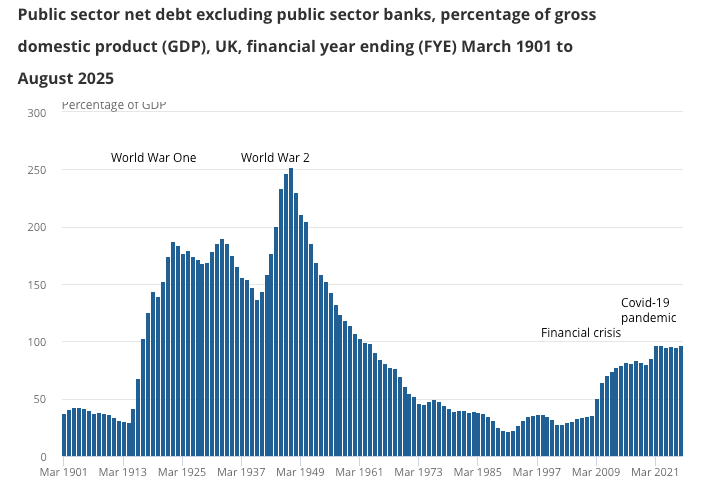
Borrowing is still expected to be lower this year and continue its decline as the government 'back ends' spending decisions and potentially cuts.
However, Lindsay James, investment strategist at Quilter says there are two concerns here for the government:
"Firstly, it is expecting the tax take to do a lot of the heavy lifting when it comes to day-to-day spending, but this will in itself weigh down on growth given where the current tax burden sits.
"Secondly, as evidenced yesterday, yields on government debt are somewhat at the mercy of events in the Middle East."
The data comes a day after the Bank of England upgraded its inflation forecasts in light of the Iran conflict, voting 9-0 to keep Bank Rate unchanged.
"The market has taken this to mean potentially two interest rate rises could be on the cards, increasing the cost of government borrowing and hindering its ability to spend elsewhere or bolster the public finances," says James.