Image © Adobe Images
The euro-dollar exchange rate remains hostage to geopolitical developments rather than central bank policy, with UniCredit warning that the ECB is unlikely to be the primary driver in the near term.
“Another steady ECB meeting is unlikely to trigger a significant EUR-USD reaction,” the bank says, noting that markets have already priced out the prospect of a near-term rate hike.
The ECB is expected to keep interest rates on hold this Thursday, but do enough to keep alive expectations for hikes later down the line.
UniCredit economists look for two hikes in 2026, which is more than what the Federal Reserve should deliver and, all else equal, prove supportive for euro-dollar.
However, the dominant force for the exchange rate will be the Middle East conflict.
“EUR-USD remains more sensitive to geoeconomic risk factors than to monetary policy expectations,” UniCredit says, pointing to the pair’s repeated moves above and below the 1.17 level as evidence of a market driven by shifts in risk sentiment rather than rate differentials.
Oil prices are moving higher again on signs of tight physical supply amidst the ongoing closure of the Strait of Hormuz.
UniCredit analysis shows there's enough of a risk premium relating to the ongoing war to keep the euro discounted relative to the dollar.
The implication is that even a hawkish shift from the ECB on Thursday would struggle to generate a sustained move in the currency while the geopolitical backdrop remains unresolved.
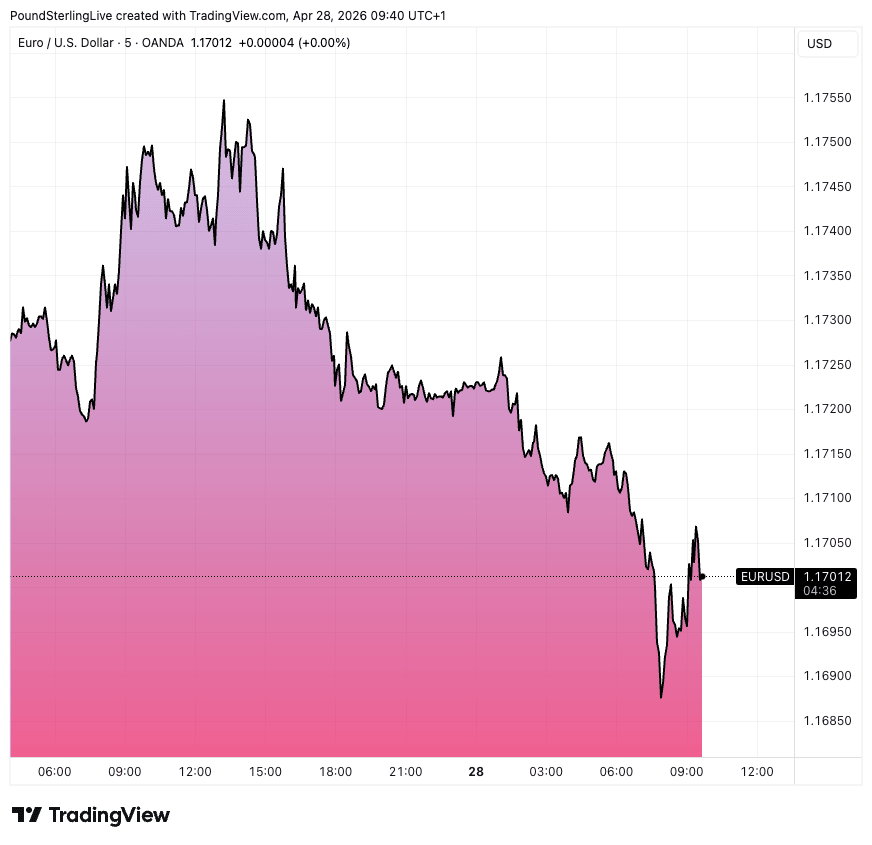
Above: EUR/USD over the past 24 hours.
There is, however, a medium-term story building: UniCredit maintains a view that policy divergence should ultimately favour the euro, with the ECB expected to deliver two rate hikes this year, while the Federal Reserve is seen cutting once in December.
“Tighter interest rate differentials could drive EUR-USD higher again,” the bank says, with scope for a return toward the year-to-date highs at 1.2078.
But timing is key as the bank cautions that any recovery is conditional on a reduction in geopolitical risk, noting that a move higher is unlikely “before the current war-driven risk premium has fully unwound.”