
Government borrowing has fallen in a sign that the UK government’s fiscal policy is on track to deliver a declining deficit.
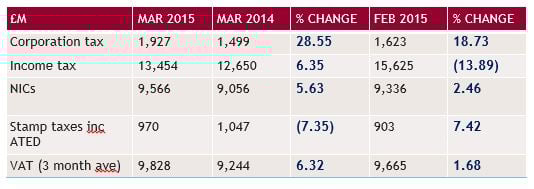
The fall in borrowing comes as corporation tax is shown to have risen 28.55% year-on-year in March confirming the growing economy is starting to deliver a dividend to the government's coffers.
In a piece penned today, our commentator David Banfield reminds us why it is important for government to stand aside and let business get on with doing business.
In March 2015, public sector net borrowing was £7.4 billion, this is a decrease in borrowing of £0.4 billion compared with March last year.
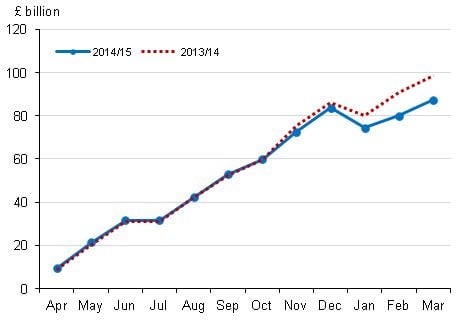
Tax receipts for March show a healthy increase over the same month last year, representing a real boost for the economy and a continued trend over the early months of the calendar year.
“The substantial rise in corporation tax receipts from the same month last year demonstrates that UK businesses are generating more taxable profits which will be welcome news for the Chancellor ahead of next month’s general election,” says David Brookes, Tax Partner at BDO LLP.
With elections ahead there are real concerns that left-wing political parties, such as Labour and Scotland’s SNP, could reverse the positive momentum.
“To maintain this encouraging momentum the new government should encourage mid-sized businesses, companies with the largest growth potential, to grow through the number of people they employ and the level of goods and services they export,” says Brookes.
Markets and businesses will not doubt be on tenterhooks on May 7th and probably for a few days afterwards as the negotiations to form a government heat up.
“George Osborne has been banging the drum that a Conservative government is voters only choice to deal with the deficit and he has plenty to shout about now that he has hit his borrowing target,” says Dennis de Jong at UFX.
“However, the rise of the SNP and their anti-austerity message is a huge threat to the Tories and has the potential to destabilise the economy,” says de Jong.
Crime Against Business Falls
It was meanwhile reported crime against businesses is falling
Crime against businesses has fallen over the last two years in England and Wales from 53 per cent to 41 per cent.
John Allan, National Chairman of the Federation of Small Businesses, said:
“Business crime affects all businesses, but because they can’t absorb the cost, it’s often the smaller firms who are hit the hardest. The consequences affect many areas of a business and can put insurance premiums up, increase financial costs and waste valuable time.
“Many businesses will therefore be encouraged to see crime against firms come down. The move to record incidents against businesses separately from other types of crime is essential to better allocate recourse to problem areas. We have long advocated for this, and strongly encourage the next Government to continue to use this strategic approach.


