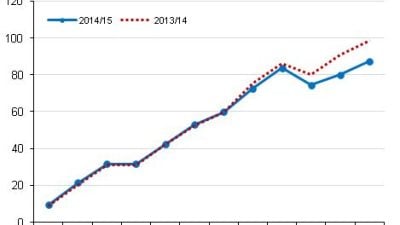
Above: Snow has impacted home-building across the United States, culminating in soft housing start data. (C) Pound Sterling Live 2015.
Weaker United States housing starts - largely owing to bad weather across the country - has allowed the GBP to turn higher against a softer USD.
US housing starts fell 2.0% m/m in January to 1.065mn units, modestly below consensus forecasts for a reading of 1.07mn.
The news ensured the US dollar edged lower against its British counterpart which was had earlier received a boost from strong employment data.
“The dollar has drifted below recent 11-year peaks as mixed news on the U.S. economy has clouded the outlook for higher U.S. interest rates. Markets will use today’s data and Fed minutes to help fine tune expectations for when the central bank might boost lending rates,” says Joe Manimbo at Western Union.
Outcomes that keep a rate hike by midyear on the table should prove dollar supportive suggests the analyst.
Poor Weather Hampers Housing Activity
Currency traders also took note of a downward revisions to previous months, with November now reporting starts of 1.015mn versus 1.043mn previously.
December starts were largely unchanged.
“We continue to see trends in housing as supportive of multi-family start activity, including improving household formation among young adults and a still-tight credit environment,” says Michael Gapen at Barclays.
Adverse weather across the Midwest and Northeast was likely a factor in restraining activity.
Starts were -3.5% m/m to 111k in the Northeast, -22.2% to 140k in the Midwest, and -3.4% m/m in the West.
“Continued adverse weather in February, including in the Northeast where snowfall has been particularly heavy, could suppress activity on a seasonally adjusted basis this month,” says Gapen.
Euro Drifts Lower as Greek Deal Remains Elusive
The Greek circus continues, ensuring the euro sees its recovery capped.
The market continues to hold out hopes that Greece will eventually reach a deal on a bridge loan from its creditors to remain fiscally afloat and a member of the euro zone.
“The clock is ticking and unless the contours of a deal take shape soon, the euro could face renewed downward pressure and perhaps make a run a recent 11-year lows,” says Manimbo.