
File image of JD Vance. Source: Gage Skidmore.
Australian dollar pressures the pound as investors worldwide turn increasingly optimistic.
Investor optimism is perhaps the Australian dollar's greatest help; this is a classic 'risk-on' currency and that is the mood midweek as hopes for a comprehensive resolution to the Iran conflict build.
The Australian dollar extended gains against the pound, euro and dollar on talk of renewed U.S.-Iran talks and hints that the deal sought is more than just an end to hostilities.
U.S. President Donald Trump said he thinks negotiations between the U.S. and Iran will continue in Pakistan this weekend.
U.S. Vice President JD Vance, who led the first round of talks, explained in a recent appearance that Trump is seeking a "grand bargain": more than just an end to hostilities but a complete reset of Iran's place in the world. This would entail movement to bring Iran back into the fold through the removal of sanctions.
That's a better case outcome for markets than a simple reopening of the Strait of Hormuz, as the unlocking of Iranian exports would amount to a positive global supply shock. Vance said the message given to Iran was that it would "thrive" if it committed to not having a nuclear weapon.

Concierge Money Transfers
For high-value transfers, you need high-value service: dedicated account management, on-point pricing, insight into market conditions and trends, help with structuring your payment, and execution support at key moments.
Learn More →Trump doesn't want to make a small deal, said Vance, "he wants to make the grand bargain."
Australian dollar gains can extend as long as these hopes are intact, particularly against shakier rivals such as pound sterling.
GBP/AUD fell to 1.8699 in February before the war in the Middle East sparked a recovery back to 1.94.
That recovery is confirmed as a countertrend rebalancing as only 38.2% of the January-February dip was recovered during March: 38.2% is an important Fibonacci marker; failure here reinforces the view that elements of the January-February selloff are alive.
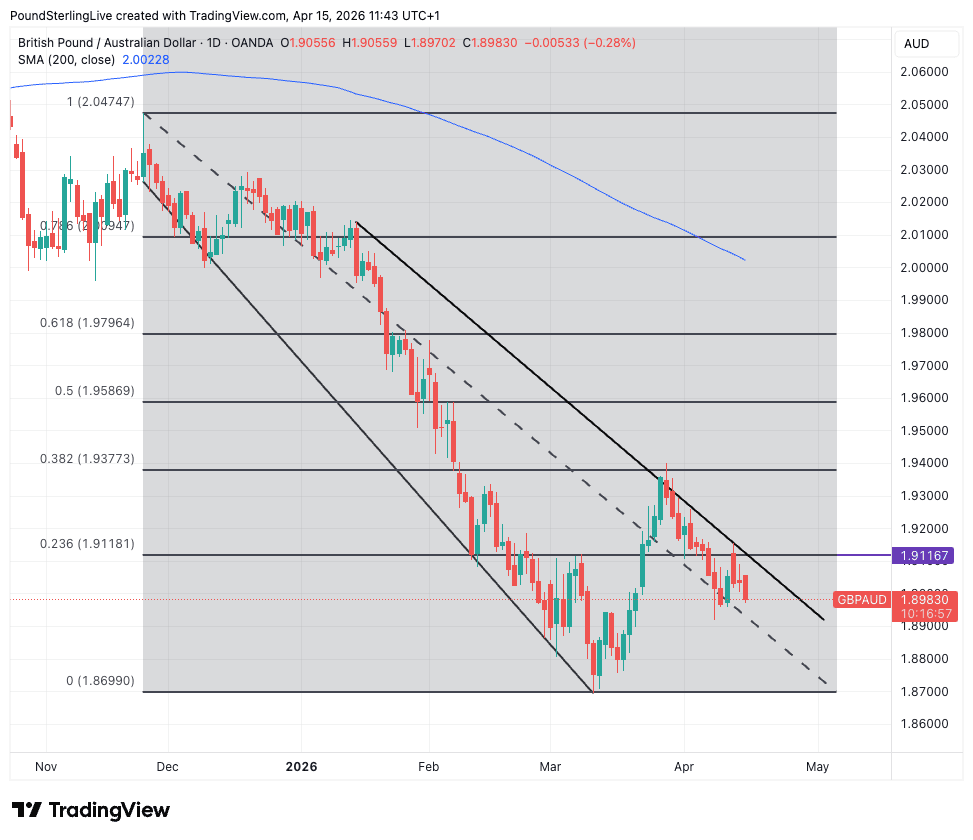
Since the rebound peak at 1.94 was rejected, the GBP/AUD has turned lower with the Australian dollar advancing during the ceasefire trade.
The obvious target is the February low at 1.87, which is achievable by month-end if current trajectories are maintained.